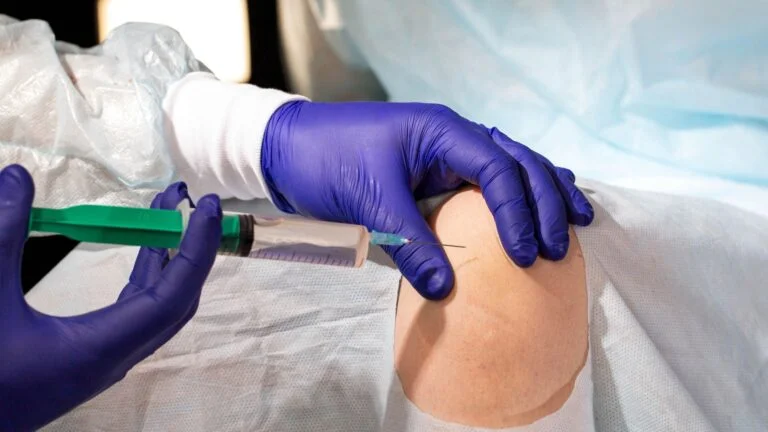
Hip Replacement Surgery in Hyderabad
Hip pain changes the way you sit, walk and sleep long before most people are ready to
consider surgery.
When arthritis, avascular necrosis or a fracture has damaged the hip joint beyond what
medication and physiotherapy can manage, hip replacement surgery restores movement that
pain has slowly taken away.
Dr. Mir Jawad Zar Khan brings more than 26 years of experience and robotic-assisted
technique to hip replacement surgery at Germanten Hospitals in Attapur, Hyderabad.
What Is Total Hip Replacement?
Total hip replacement, also known as total hip arthroplasty, replaces the damaged ball
of the thighbone and the worn socket of the pelvis with an artificial joint.
The new joint is designed to move smoothly through a range of motion similar to a
healthy hip, allowing patients to walk, sit and climb stairs without the grinding pain
caused by bone rubbing against bone.
Conditions That May Require Hip Replacement
Several conditions can damage the hip joint enough to require replacement surgery:
-
Osteoarthritis: The gradual wearing down of cartilage caused by
age and long-term joint stress.
-
Avascular necrosis: A condition in which blood supply to the head
of the thighbone is disrupted and the bone tissue begins to collapse. It may be
linked to prolonged steroid use, heavy alcohol use or unknown causes.
-
Rheumatoid arthritis: An inflammatory condition that can damage
the joint lining and cartilage.
-
Hip or thighbone fractures: These are particularly common in older
adults after a fall.
-
Childhood hip conditions: Certain developmental conditions can
cause early joint degeneration during adulthood.
Signs You Should See a Hip Specialist
Persistent groin or thigh pain, pain that spreads to the knee, a noticeable limp,
difficulty putting on shoes or socks, and hip stiffness after sitting for long periods
are all reasons to have the joint evaluated.
Waiting too long can make the surrounding muscles weaker and may slow the eventual
recovery process.
Robotic and Computer-Navigated Hip Replacement
Positioning the hip implant at the correct angle and depth has a direct effect on leg
length, joint stability and how naturally the hip moves after surgery.
Computer navigation and robotic-assisted planning allow the surgical team to map these
measurements before surgery and verify implant position in real time during the
procedure, reducing the guesswork involved in manual techniques.
Minimally invasive approaches are used where appropriate to limit muscle disruption and
support faster early mobilisation after surgery.
The Hip Replacement Procedure and Hospital Stay
Hip replacement surgery generally takes one to two hours under spinal or general
anesthesia.
Patients are encouraged to stand and begin walking with support soon after surgery,
often on the same day, under the guidance of the physiotherapy team.
A typical hospital stay ranges from three to five days, depending on age, general health
and how quickly early mobility targets are achieved.
Recovery After Hip Replacement
First Two Weeks
The first two weeks focus on wound healing, pain control and learning safe
movement patterns to protect the new joint. This includes precautions around
bending and crossing the legs.
Following Weeks
Walking distance increases steadily with the help of a walker or stick.
Six to Eight Weeks
By six to eight weeks, most patients have progressed to a cane or are walking
unaided for short distances.
Three to Six Months
Full recovery, including a return to normal daily activities and most forms of
low-impact exercise, typically takes three to six months.
Long-Term Outcomes of Hip Replacement
Hip replacement has one of the strongest long-term safety records in orthopedic
surgery.
A population-based cohort study following patients for up to twenty years, published
through The Lancet, recorded implant survival of more than 95 percent at ten years and
approximately 85 percent at twenty years.
For patients over 70, the lifetime risk of requiring another hip surgery was found to
be approximately 5 percent, demonstrating how durable modern hip implants have become.
Why Choose Dr. Jawad for Hip Replacement in Hyderabad?
Dr. Mir Jawad Zar Khan's training includes advanced fellowship work in joint
replacement in Munich, Germany.
He has also collaborated internationally with Dr. Roland Wetzel, honorary department
head for hip and knee joint replacement surgery at University Hospital Munich.
This partnership shapes the surgical protocols used for hip replacement at Germanten
Hospitals, combining German surgical standards with the convenience of care in
Hyderabad.
Frequently Asked Questions
How long does hip replacement surgery take?
The procedure itself usually takes between one and two hours, although the total
time in the operating room, including anesthesia preparation, is longer.
How soon can I walk after hip replacement?
Most patients are supported to stand and take their initial steps within one day of
surgery. Walking distance then increases daily under physiotherapy supervision.
What precautions should I follow after hip replacement?
Early recovery involves avoiding certain hip positions, such as deep bending or
crossing the legs, to protect the new joint while the surrounding tissue heals.
The physiotherapy team provides guidance based on the surgical approach used.
Can hip replacement be done on both sides at once?
Bilateral hip replacement may be possible for medically fit patients after a
detailed cardiac and overall health evaluation. The decision is made on a
case-by-case basis.
What causes avascular necrosis of the hip?
Avascular necrosis develops when blood supply to part of the thighbone is disrupted,
causing the bone to weaken and the joint surface to collapse over time. Prolonged
steroid use, excessive alcohol consumption and trauma are recognised risk factors,
although the exact cause is not always identified.
How long does a hip replacement implant last?
Long-term studies show survival rates above 95 percent at ten years and around
85 percent at twenty years. Most patients therefore do not require revision surgery
for decades, if ever.
.webp)