Joint Replacement Surgery in Hyderabad
Joint pain that does not improve with rest, medication or physiotherapy can slowly take
over daily life. Simple tasks like climbing stairs, sitting on the floor, or walking to
the market can start to feel impossible.
Joint replacement surgery is often the point where patients regain their independence.
At Germanten Hospitals in Attapur, Hyderabad, joint replacement surgery is led by
Dr. Mir Jawad Zar Khan, an orthopedic surgeon with more than 26 years of experience and
a fellowship in arthroplasty from Munich, Germany.
What Is Joint Replacement Surgery?
Joint replacement surgery, also called arthroplasty, involves removing a damaged joint
surface and replacing it with an artificial implant made of metal, ceramic or
medical-grade plastic.
The implant is shaped to move in a way similar to a healthy joint, allowing the patient
to bend, walk and bear weight with substantially less pain than before surgery.
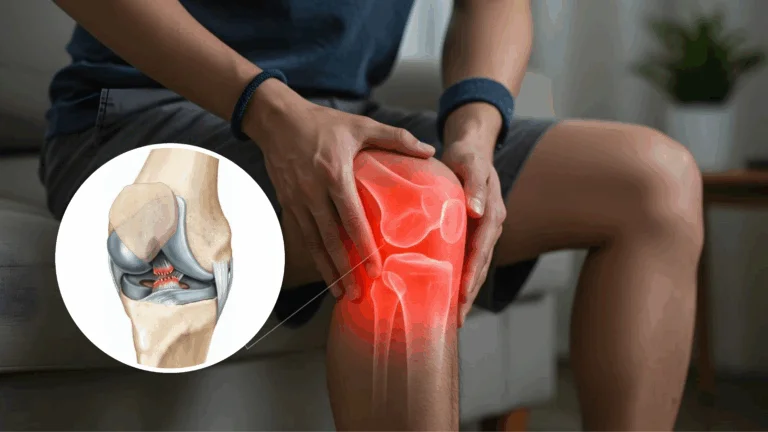
Cartilage inside a joint acts as a cushion between two bones. Once this cartilage wears
away, usually because of age-related arthritis, injury or long-standing inflammation,
the bones begin rubbing against each other. This produces the grinding pain and
stiffness that eventually brings many patients to an orthopedic clinic.
When Do You Need Joint Replacement?
Not every joint problem requires surgery. Doctors generally recommend joint
replacement only after conservative treatment, including rest, physiotherapy, weight
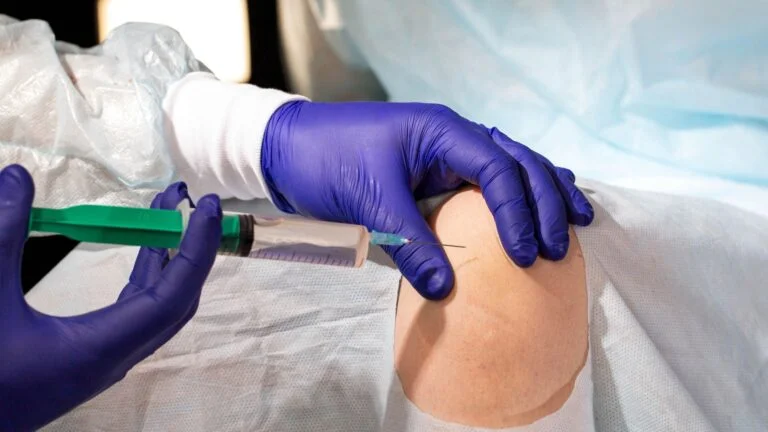
management, medication or injections, has stopped providing adequate relief.
Common signs that a joint may have reached this stage include:
- Pain that continues even while sitting or lying down
- Stiffness that limits how far the joint can bend or straighten
- A visible change in the shape of the knee or hip, such as bowing
- Difficulty walking more than a short distance without stopping
- Pain that disturbs sleep several nights a week
- X-rays showing bone rubbing directly against bone
Knee osteoarthritis is more common in India than many patients realise. A systematic
review published in the Indian Journal of Orthopaedics found that close to one in five
to nearly one in three Indian adults show signs of knee osteoarthritis, with rates
rising sharply after the age of 45.
Recognising early symptoms and consulting an orthopedic surgeon before the joint
deteriorates further can provide access to a broader range of surgical and
non-surgical treatment options.
Types of Joint Replacement Surgery We Offer
Every joint behaves differently. Treatment is planned according to which joint is
affected and how much damage has occurred.
Total Knee Replacement
Total knee replacement replaces the complete knee joint surface and is usually
recommended when arthritis affects most of the joint.
Partial Knee Replacement
Partial knee replacement resurfaces only the damaged section of the knee while
preserving healthy bone and ligaments. It may suit patients whose arthritis is
limited to one part of the joint.
Total Hip Replacement
Total hip replacement replaces the ball and socket of the hip joint. It is
commonly performed for advanced arthritis, avascular necrosis or certain hip
fractures.
Shoulder Replacement
Shoulder replacement may be used for severe shoulder arthritis or complex
fractures that have damaged the joint surface beyond repair.
Revision Joint Replacement
Revision joint replacement is a second operation performed when an earlier knee
or hip implant has worn out, loosened or become infected.
Robotic and Computer-Navigated Joint Replacement Technology
Implant alignment plays an important role in how long a joint replacement lasts and how
natural it feels after recovery.
Germanten Hospitals uses computer navigation and robotic-assisted systems, built around
German precision engineering, to help position each implant with a level of accuracy
that can be difficult to achieve using manual instruments alone.
This technology, combined with minimally invasive surgical techniques, is one reason
many patients are able to stand and take a few supported steps within hours of surgery
rather than waiting several days.
Faster mobilisation after surgery has been associated with a lower risk of blood clots
and a quicker return to independent walking.
What Happens During the Joint Replacement Journey?
Clinical Evaluation and Imaging
Every case begins with a clinical examination, a review of symptoms and imaging
such as X-rays or an MRI. This confirms how much of the joint is damaged and
whether surgery is the correct next step or whether further conservative care
should be considered.
Pre-Surgical Preparation
Once surgery is planned, patients undergo routine blood tests, an anesthesia
review and a discussion about the implant being used. Existing conditions such
as diabetes or high blood pressure are brought under control before the surgery
date is finalised.
Surgery and Early Mobilisation
Most primary knee and hip replacement procedures take between one and two
hours. Patients are typically transferred to a private room and encouraged to
sit up or stand with support on the same day.
Hospital Stay and Discharge
Hospital stay after joint replacement usually ranges from three to five days,
depending on age, general health and how quickly the patient regains mobility.
Before discharge, the physiotherapy team reviews walking technique, stair
climbing and home safety precautions.
Recovery and Rehabilitation After Joint Replacement
Physiotherapy is an essential part of joint replacement recovery. It strongly influences
how much mobility, strength and functional benefit the patient gains from surgery.
Most rehabilitation programmes focus on restoring range of motion during the first two
weeks, building strength over the following month, and returning to normal daily
activity within approximately six to twelve weeks.
Long-term outcomes for joint replacement are well documented. A large population-based
study published in The Lancet followed patients for up to twenty years and found implant
survival rates above 95 percent at ten years for both knee and hip replacements, with
rates declining gradually after that.
In practical terms, most patients who undergo joint replacement do not require another
operation on the same joint for well over a decade, and many may never require a second
replacement during their lifetime.
Why Patients Choose Dr. Jawad and Germanten Hospitals for Joint Replacement
Dr. Mir Jawad Zar Khan holds an M.S. in Orthopedics from Osmania University, where he
was recognised as the top outgoing postgraduate, and an M.Ch in Orthopedics from Usaim,
Seychelles.
He completed a fellowship in arthroplasty at a leading orthopedic institute in Munich,
Germany, and has performed more than 10,000 joint replacement procedures during a
career spanning more than 26 years.
Germanten Hospitals is a NABH-accredited, 250-plus-bed orthopedic and multispecialty
hospital in Attapur, Hyderabad. It is supported by dedicated operation theatres and an
in-house team of physiotherapists and anesthetists involved in orthopedic recovery.
Frequently Asked Questions
How painful is joint replacement surgery?
Surgery is performed under anesthesia, so patients do not feel pain during the
procedure. Pain after surgery is managed with a structured pain-relief plan.
Most patients describe the discomfort as manageable and steadily improving each
day rather than severe.
What is the right age for joint replacement?
There is no fixed age limit. The decision depends on the extent of joint damage,
the severity of pain and how much daily life is affected, rather than age alone.
Both younger and older adults can be suitable candidates after a detailed
evaluation.
How long does a joint replacement implant last?
Modern implants are designed for long-term use. Studies report survival rates
above 95 percent at ten years and approximately 85 to 90 percent at twenty years
for knee and hip replacements. Many patients therefore require only one
replacement during their lifetime.
Can both knees or both hips be replaced during the same surgery?
Simultaneous bilateral replacement may be possible for selected patients who are
medically fit. The decision is made after reviewing overall health, heart and
lung function, recovery capacity and personal preference.
Is robotic joint replacement better than conventional surgery?
Robotic and computer-navigated systems improve the precision of implant
positioning. Better alignment may support natural movement and potentially
improve implant longevity. The surgeon's experience remains equally important
in determining the final outcome.
What does joint replacement surgery cost in Hyderabad?
The cost depends on the joint involved, the implant selected, whether robotic
technology is used and the room category. A precise estimate is provided after
the initial consultation and diagnostic review.